.png)


Simultaneous Interpretation
Solutions
Our expertise in the field
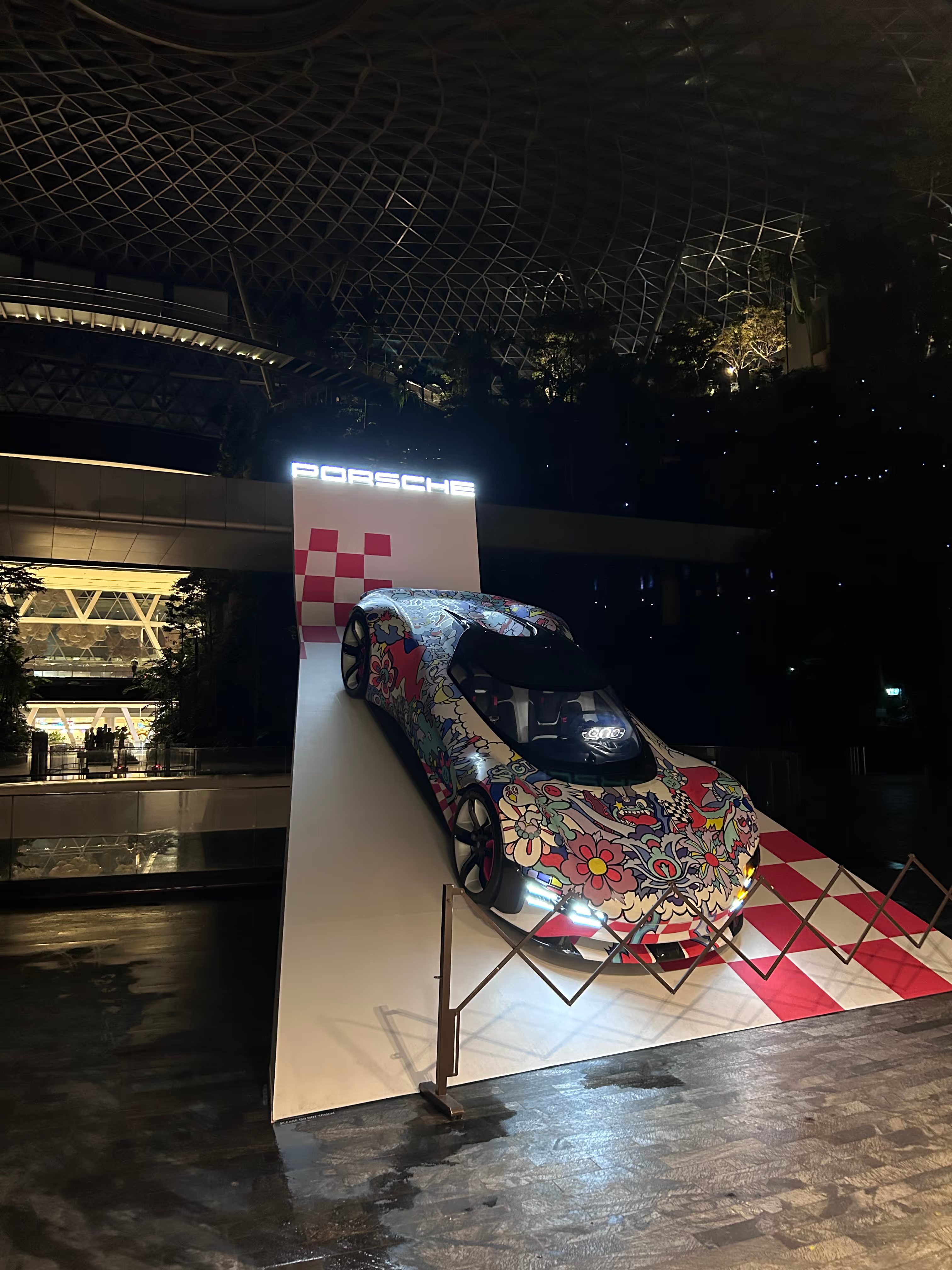
Since 2013, we have offered reliable simultaneous interpretation services globally, collaborating with notable organizations such as the United Nations, the United States Government, Porsche, and FIFA.
We have effectively managed multilingual teams and advanced remote simultaneous interpretation platforms for international conferences and hybrid training sessions, consistently providing seamless interpretation experiences and earning the trust of global institutions.
About Simultaneous interpretation
It enables smooth communication during large events and requires skilled interpreters and equipment like headsets and soundproof booths. This method is often used in important events where quick multilingual communication is essential.

.avif)
- Timeliness is crucial, particularly in situations where consecutive interpretation is not viable.
- Live Broadcasted Events
- Focus groups or any event characterized by an open-ended discussion format.
- Interpretation is required into more than one language
- International conferences and conventions
- Webinars, hybrid, or virtual events
- Government, Diplomatic & Legal Settings
- Trainings
Benefits of Simultaneous Interpretation
Ideal for Large Groups: This system works for events with hundreds or thousands of attendees.
Supports Multiple Languages: It offers different language options simultaneously for diverse audiences.
Limitations of of Simultaneous Interpretation
Limited Languages: This service often supports only common languages, with fewer options for rare pairs.
Smaller Talent Pool: There are fewer qualified simultaneous interpreters available.

Our cases

.svg)
Porsche
Mi mollis sollicitudin tempus elit class, mus enim risus ad. Sodales ut class sit phasellus fermentum sollicitudin.
.svg)
Consecutive Interpretation
Mi mollis sollicitudin tempus elit class, mus enim risus ad:
- Sodales ut class sit phasellus fermentum sollicitudin.
- Nascetur amet sollicitudin vestibulum erat cubilia congue.

.svg)
US Federal Government
Mi mollis sollicitudin tempus elit class, mus enim risus ad. Sodales ut class sit phasellus fermentum sollicitudin.
Consecutive Interpretation
Mi mollis sollicitudin tempus elit class, mus enim risus ad:
- Sodales ut class sit phasellus fermentum sollicitudin.
- Nascetur amet sollicitudin vestibulum erat cubilia congue.
Asian Football Confederation
Mi mollis sollicitudin tempus elit class, mus enim risus ad. Sodales ut class sit phasellus fermentum sollicitudin.
Consecutive Interpretation
Mi mollis sollicitudin tempus elit class, mus enim risus ad:
- Sodales ut class sit phasellus fermentum sollicitudin.
- Nascetur amet sollicitudin vestibulum erat cubilia congue.


.webp)
Frequently Asked Questions about SI
It's ofter mistakenly named as conference or simultaneous translation, instant or live translation.
- Standard, on-site (referred to as physical or in-person) simultaneous interpretation. Previously it was referred as simultaneous interpretation only, however with the advent of tools for remote simultaneous interpretation, it's important to mention if the project is on-site to differentiate from remote.
- Chuchotage, a French term, describes a unique method of interpretation where the interpreter whispers the interpretation into the listener's ear.
- Remote Simultaneous Interpretation, referred to as RSI, is a form of language interpretation in which interpreters provide simultaneous interpretation from a remote location, typically using technology and audiovisual equipment to facilitate communication. RSI is applicable to fully virtual events as well as hybrid events, where interpreters connect and provide interpretation for physical gatherings.
1 interpreter per language – Suitable for short events (up to 1 hour), if it's the interpreter’s only assignment that day.
2 interpreters per language – Standard for most assignments over 1 hour. Interpreters typically switch every 20–30 minutes to maintain accuracy and stamina.
3 interpreters per language – Recommended for highly technical content or extended sessions (8+ hours) to ensure continuous, high-quality delivery.
Simultaneous interpretation is mentally and physically demanding. Rotating interpreters helps maintain clarity, focus, and accuracy throughout the event.
Simultaneous interpretation is an exceptionally demanding service, both in terms of experience and energy consumption.
Additionally, the cost of interpretation services is influenced by the following factors:
Language: The cost can vary based on factors such as the availability of interpreters in a particular region or city, the cost of living in that area, and the interpreter's experience level. Historically, the cost for certain languages has been notably higher than others, including Japanese, Korean, and Scandinavian languages. This pricing is influenced by the socio-economic conditions in the respective countries.
Technical Subject Matter: Interpretation costs can be higher for technical subjects, as they often require extensive advance preparation, involving hours of research and familiarization.
However, when interpreters are approached by the client directly, they may offer higher rates.
Additionally, the process of sourcing, securing a qualified interpreters team, performing project management, & coordination can be time-consuming, and your team may not possess the necessary expertise to handle these tasks efficiently.
Choosing to collaborate with a professional company offering turn-key solutions may result in time and cost savings. Interpreters often provide better rates through agencies because agencies offer a steady flow of projects to them & understand the intricacies of project management & the unique requirements of the conference interpreters.